

2025 Toyota RAV4 vs. Honda CR-V: Which SUV Dominates This Year?
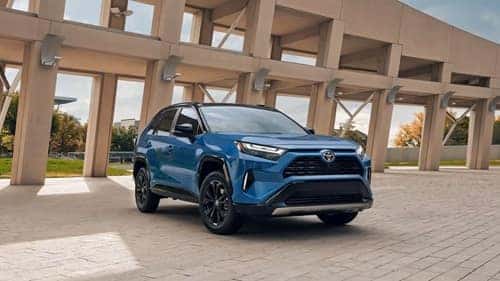 Compact SUVs remain wildly popular among families and daily commuters, with the Toyota RAV4 and Honda CR-V fighting for the top spot. The 2025 models pack tons of features, but picking between them isn’t easy. In this Honda CR-V and Toyota RAV4 comparison, we help you decide by breaking down which SUV might work best for your adventures in Auburn, California, whether you’re zipping around town or heading up to the Sierra Nevada on weekends.
Pricing and Value for Money
Let’s start by comparing the CR-V vs. RAV4 price. The 2025 RAV4 starts at $29,250, slightly less than the CR-V’s $30,100 base price. Toyota offers four gas trims: the LE ($29,250), XLE ($30,760), XLE Premium ($33,650), and Limited ($37,555). There are also seven hybrid models, with the top-of-the-range Hybrid Limited costing $40,605. The Honda CR-V comes in six trims, including three hybrids, with the Sport Touring Hybrid topping out at $41,100.
Despite being cheaper, the RAV4 includes better standard features — an 8-inch touch screen, wireless phone integration, satellite radio, and three USB ports. The CR-V’s base model comes with a 7-inch screen, Apple CarPlay, Android Auto, a four-speaker audio, and one USB port.
Performance and Driving Experience
Let’s see how these SUVs perform and compare the Toyota RAV4 vs. Honda CR-V specs. The 2025 RAV4 has a 2.5-liter four-cylinder engine (203 horsepower at 6,600 rpm, 184 lb-ft torque at 5,000 rpm) paired with an eight-speed automatic transmission. The CR-V features a turbocharged 1.5-liter four-cylinder (190 horsepower at 6,000 rpm, 179 lb-ft torque at 1,700 rpm) with a continuously variable transmission.
The CR-V goes from 0 to 60 mph in 8.1 seconds, slightly quicker than RAV4’s 8.3 seconds. On Auburn’s hills, the RAV4’s stronger engine shines, while the CR-V excels in city driving with lighter steering for easier parking and maneuvering.
Interior Design and Comfort
The 2025 CR-V rocks a modern cabin with eye-catching honeycomb trim across the dash vents, giving off sophisticated vibes. The RAV4’s cabin is more basic and feels tougher with its angular shapes.
Space is where Honda pulls ahead with a generous 41 inches of rear legroom in the CR-V compared to 37.8 inches in the RAV4. The CR-V also wins in total passenger volume with 103.5 cubic feet vs. 98.9 in the Toyota. Both SUVs use nice materials and comfortable seats, but if you regularly haul adults in the back, the CR-V’s roomier cabin might seal the deal.
Cargo Space and Practicality
When you compare the cargo space of the CR-V vs. RAV4, the Honda comes out on top with 39.3 cubic feet behind the back seats and a massive 76.5 cubic feet with the seats folded flat. In the RAV4 you still get a decent 37.5 cubic feet with all seats up and 69.8 cubic feet maxed out. For Auburn families loading up for Tahoe ski trips or Folsom Lake days, those extra Honda inches could matter.
Need to tow? Both standard models can pull 1,500 pounds, but some RAV4 configurations can handle up to 1,750 pounds — handy if you’ve got a small trailer or Jet Ski. It’s worth noting that CR-V Hybrid models drop to a 1,000-pound tow rating. If you occasionally haul small boats or camping trailers, the RAV4 might be the better pick.
Fuel Economy and Efficiency
Both SUVs are fuel-efficient. The standard CR-V earns EPA ratings of 28 mpg city, 34 highway, and 30 combined, while the RAV4 gets 27 city, 35 highway, and 30 combined. Hybrid models offer even better efficiency. The CR-V Hybrid reaches 43 mpg city and 36 mpg highway (40 mpg city and 34 mpg highway with all-wheel drive), while the RAV4 Hybrid delivers 41 mpg city and 38 mpg highway (38 mpg city and 35 mpg highway for the Hybrid Woodland Edition). When you’re dealing with California gas prices, these modest differences can translate to meaningful savings over time.
Safety Features and Ratings
Safety tech comes standard on both contenders. The RAV4 includes Toyota Safety Sense 2.5 that features a precollision system with pedestrian detection, lane departure alert with steering assist, and lane tracing assist. Honda packs similar tech into its Honda Sensing suite, including forward collision warning, lane-keeping assist, and a collision mitigation braking system.
On crash tests, the 2025 RAV4 and CR-V earned five stars overall from the National Highway Traffic Safety Administration. They also both scored “Good” ratings from the Insurance Institute for Highway Safety across small overlap front, moderate overlap, and side impact crash tests. This means you can feel confident in either choice — both SUVs protect passengers extremely well, whether you’re navigating I-80 traffic or winding back roads through the foothills.
Reliability and Maintenance
Looking at predicted reliability, J.D. Power gave the 2025 CR-V a solid 84 out of 100 (“Great” category). The RAV4 scored slightly lower at 80 out of 100 (“Average” range). Both SUVs offer identical warranty coverage: a three-year/36,000-mile basic warranty and five-year/60,000-mile powertrain warranty.
Your wallet might notice small differences in upkeep costs. According to RepairPal, the average annual repair cost for a Toyota RAV4 is $429 compared to $407 for a Honda CR-V. Both compare favorably to an average of $521 for compact SUVs and $652 for all vehicle models.
Design and Aesthetics
These SUVs couldn’t look more different. The RAV4 sports a tough, almost truck-like appearance that fits perfectly with Auburn’s outdoor lifestyle. Wheel options range from 17 to 19 inches, giving you plenty of style choices. The CR-V takes a smoother, city-slicker approach with its curved lines and offers 17- or 18-inch wheels depending on trim.
Cabin styling follows similar paths. The CR-V feels more upscale with its contemporary layout and that distinctive honeycomb dash trim. The RAV4 cabin mixes comfort with rugged touches — still quality materials but with a more adventure-ready vibe.
Technology and Innovation
Tech options give the RAV4 a slight upper hand, with its standard 8-inch touch screen that’s upgradable to 10.5 inches in higher trims. The CR-V has a 7-inch display with an optional 9-inch screen in pricier models. Both support wireless Apple CarPlay and Android Auto, but the RAV4 includes these as standard in every trim.
The RAV4 also offers some fancy extras you can’t get in the CR-V, such as an optional 12.3-inch digital gauge cluster and head-up display. These gadgets create a futuristic driving experience. Both SUVs connect easily to your devices and have user-friendly interfaces.
Which SUV Fits Your Needs?
So, which is better: the Honda CR-V or Toyota RAV4? The 2025 CR-V comes top for reliability and maintenance, passenger and cargo space, and cabin style. However, the 2025 RAV4 wins overall for its value, stronger engine, better highway fuel efficiency, and excellent tech. Its styling also suits Auburn’s outdoor lifestyle.
Would you like to see the RAV4 for yourself? Check out our new and used SUVS for sale online, then visit our Auburn Toyota dealership for a test-drive. If you have any questions, just call us at 530-885-8484 — we’re here to help you find your ideal compact SUV.
Photo Courtesy of Toyota
0 comment(s) so far on 2025 Toyota RAV4 vs. Honda CR-V: Which SUV Dominates This Year?