

Toyota Tundra Gas vs Hybrid: Which Powertrain Makes More Sense for Auburn Drivers?
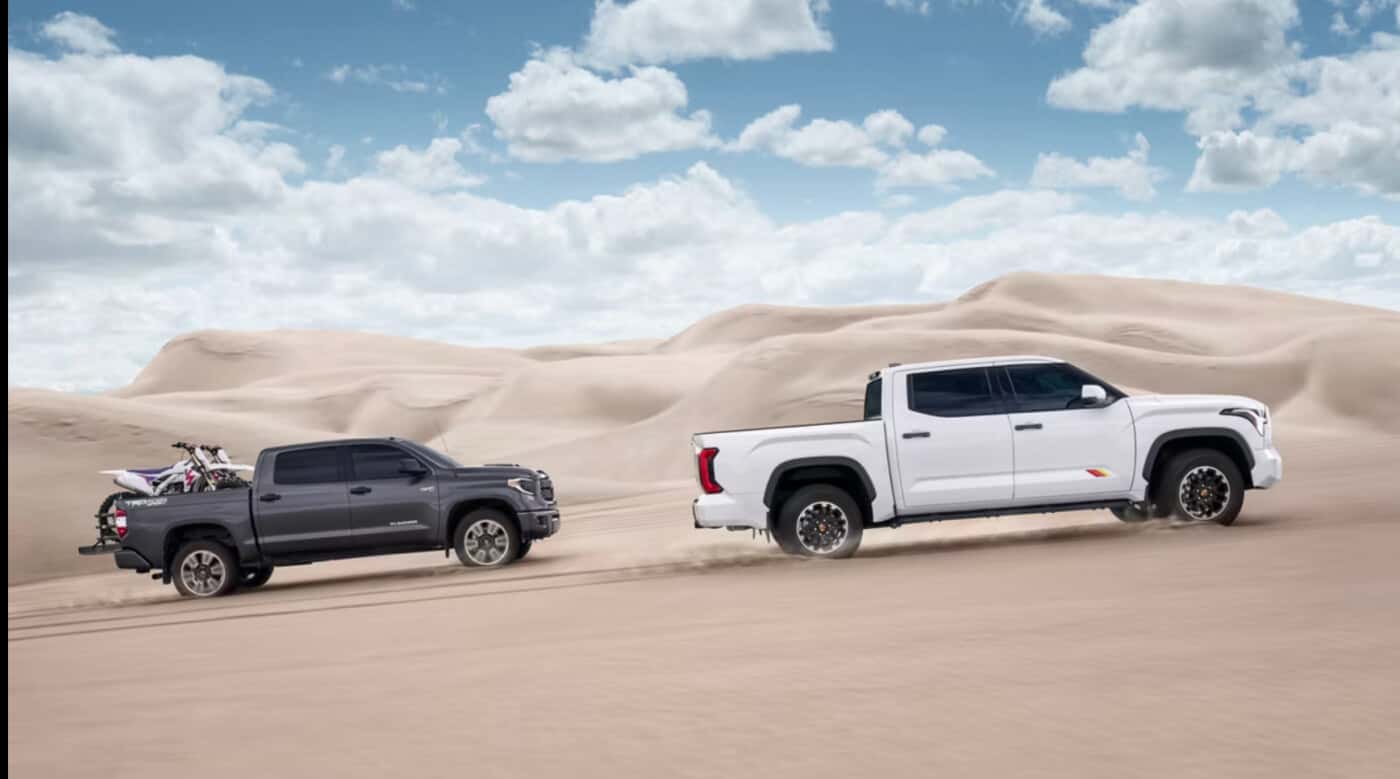 The choice between the Toyota Tundra’s gas and hybrid powertrain comes down to how you actually use your truck. Auburn drivers deal with Highway 49 commutes, Sierra Nevada grades, boat launches at Folsom Lake, and weekend runs up to Tahoe. Those real-world demands make the Toyota Tundra gas vs hybrid question genuinely worth thinking through. You can explore our Tundra inventory now, or read on to find out which powertrain fits your driving life before you visit.
The 2026 Toyota Tundra doesn’t make you sacrifice capability for efficiency. Both powertrains share the same platform, and both carry Toyota’s reputation for long-term reliability. The differences come down to output, torque delivery, fuel economy, and which driving situations each setup handles best.
i-FORCE vs i-FORCE MAX: A Direct 2026 Tundra Powertrain Comparison
The 2026 Toyota Tundra offers two distinct powertrain choices. The i-FORCE is a twin-turbocharged V6 that runs on gasoline alone. The i-FORCE MAX pairs that same V6 with an electric motor integrated into the transmission. Both use a 10-speed automatic, so the driving experience has a familiar feel regardless of which you choose.
The electric motor in the i-FORCE MAX adds immediate torque from a dead stop, fills in the gap between gear changes, and lets the combustion engine work more efficiently under certain conditions. That combination changes how the truck behaves most when you’re loaded down or climbing.
| Feature | i-FORCE (Gas) | i-FORCE MAX (Hybrid) |
| Horsepower | 389 hp | 437 hp |
| Torque | 479 lb-ft | 583 lb-ft |
| MPG (City/Hwy/Combined), RWD | 18 / 24 / 20 | 20 / 24 / 22 |
| Max Towing Capacity | 12,000 lbs | 11,450 lbs |
| Trim Availability | SR, SR5, Limited, and more across multiple cab styles | Limited, Platinum, 1794 Edition, TRD Pro, Capstone (CrewMax only) |
| Starting Price | $41,260 (SR) | $58,560 (Limited i-FORCE MAX) |
Power, Torque, and Real-World Performance Behind the Wheel
On paper, the specs between these two powertrains are separated by more than numbers. The character of each engine shapes how the truck feels in everyday use, and Auburn’s varied terrain makes that difference noticeable.
i-FORCE Gas: Character and Best-Fit Scenarios
The i-FORCE delivers 389 hp and pulls smoothly through its power band, giving the Tundra a responsive feel on open highway or around town. For drivers who primarily use their Tundra for daily driving, light hauling, and occasional weekend trips without heavy loads, this powertrain is completely capable and enjoyable. It also offers broader trim and cab availability, which matters when you’re building a truck to a specific budget or feature set.
i-FORCE: Pros and Cons
Pros:
- Higher max towing at 12,000 lbs, the strongest figure in the lineup
- Available across more trims and both cab styles, including Double Cab
- Lower entry price and simpler powertrain
Cons:
- Lower combined fuel economy than the hybrid
- Turbo can hesitate briefly at low RPM under load
- No electric torque fill on grades or from a stop
i-FORCE MAX Hybrid: What the Electric Motor Adds
The i-FORCE MAX reaches 437 hp and 583 lb-ft of torque. That torque figure is what separates the two powertrains most dramatically. The electric motor delivers power with a smoothness that turbocharged gas engines can’t fully replicate. Under acceleration from a stop, especially when loaded, the hybrid Tundra feels more effortless, launching with authority without the momentary hesitation that can occur while a turbo spools up at low RPM. You can view available i-FORCE MAX Tundra models to see current configurations in stock.
i-FORCE MAX Hybrid: Pros and Cons
Pros:
- More power and torque at 437 hp and 583 lb-ft
- Instant low-end torque for towing, merging, and grade climbs
- Better combined fuel economy, strongest in stop-and-go driving
Cons:
- Slightly lower max towing at 11,450 lbs
- CrewMax body style only, no Double Cab option
- Higher upfront cost
Towing and Hauling: Where the Hybrid’s Low-End Torque Does the Work
For Auburn drivers who regularly tow, the i-FORCE MAX is worth serious consideration. Towing a boat up Foresthill Road or pulling a loaded trailer over the hill toward Reno requires sustained, controllable power at low to moderate speeds, and that’s precisely where the hybrid’s torque delivery excels.
When you’re merging onto I-80 with a trailer, or climbing out of Auburn toward Colfax with a fifth wheel attached, the electric motor’s instant torque means the transmission isn’t hunting for gears and the engine isn’t straining to find its power band. The experience feels more composed and controlled.
It’s worth noting that the i-FORCE gas engine actually has a slight towing capacity edge at 12,000 lbs versus 11,450 lbs for the hybrid. For most recreational towing that difference is negligible, but buyers with maximum-weight loads should factor it in.
Fuel Economy in Northern California: What Each Powertrain Actually Delivers
The i-FORCE MAX’s fuel economy advantage is real, though it’s worth being honest about where it matters most. Stop-and-go commuting around Auburn and Roseville is where regenerative braking and electric assist make the biggest difference. Every time you slow down for a light on Highway 49, the system recaptures energy rather than wasting it as heat.
Highway driving at steady speeds narrows the gap considerably. At a consistent cruise, the combustion engine carries most of the load efficiently on its own. Drivers doing long I-80 highway stretches at speed will see less of a difference than those running daily Sacramento commutes. Across mixed driving over a year, the hybrid still comes out ahead on fuel cost, but high-speed highway-heavy routes compress that advantage.
Off-Road Capability and Sierra Recreation Performance
Auburn sits at the edge of some of Northern California’s best off-road territory. Both powertrains handle off-road duty well, but the i-FORCE MAX brings specific advantages. Low-speed torque matters when you’re picking through rocky trails or crawling over uneven terrain. The electric motor delivers that torque with precision, giving fine-grained throttle control rather than a combustion surge that could break traction at the wrong moment.
For Auburn drivers who consider Sierra trails a regular part of their lives, the hybrid Tundra’s composure off-road is a meaningful advantage.
Trim Availability, CrewMax Requirement, and Pricing Differences
The i-FORCE MAX is available only in the CrewMax body style. If you prefer the Double Cab, the i-FORCE gas engine is your only option. For most Auburn buyers this isn’t a dealbreaker since the CrewMax is the more popular configuration, but it’s worth knowing before you start building a trim.
The i-FORCE MAX carries a higher starting price on comparable trims, reflecting the added complexity and performance it delivers. When you factor in long-term fuel savings and the performance advantages under load, many buyers find the premium justifiable. The Limited, Platinum, 1794 Edition, TRD Pro, and Capstone trims all support the i-FORCE MAX, giving buyers across the upper end of the lineup access to the hybrid with extensive technology and comfort features included.
Which Tundra Powertrain Fits Your Auburn Lifestyle?
The right choice depends on how you use your truck week to week.
Daily Commuters and Weekend Drivers
If your Tundra mostly handles commuting, grocery runs, and occasional weekend adventures without heavy loads, the i-FORCE gas powertrain is a solid, capable choice. It’s more accessible from a price standpoint and delivers more than enough performance for everyday use. The hybrid is still a smart option if improved fuel economy over time is a priority, but the performance gap won’t affect a light-duty daily routine in meaningful ways.
Towing Campers, Boats, and Trailers
The i-FORCE MAX is the clear recommendation for consistent towing use. Auburn drivers who regularly haul boats to Folsom Lake, pull fifth wheels toward Tahoe, or move trailers for work will appreciate the hybrid’s edge every time they hitch up. The torque delivery and composed feel under load make it the better tool for this job.
Construction and Work Truck Use
Work truck buyers should think about their typical day. If the truck idles frequently, hauls tools across Auburn and Placer County job sites, and spends time in stop-and-go traffic, the hybrid’s efficiency advantages add up. For lighter, consistent highway driving between job sites, the i-FORCE handles the workload without the hybrid premium.
Sierra Recreation and Off-Road Adventures
Drivers who spend time on Forest Service roads or demand trail performance should seriously consider the hybrid Tundra. The electric motor’s low-speed torque translates directly into better trail control, and for recreational use in the Sierra Nevada, the i-FORCE MAX is the stronger setup.
Test Drive Both Powertrains at Auburn Toyota
Reading about torque figures and MPG estimates only goes so far. Getting both trucks on the roads around Auburn, including a grade climb or two, makes the difference immediately apparent.
Explore Inventory and Get Behind the Wheel
We carry new Tundra models across both powertrain options. Our team can walk you through trim availability, pricing, and configuration options for the 2026 Toyota Tundra. Use our SmartPath tools to start exploring builds from home, or stop by 800 Nevada Street in Auburn, CA 95603 to compare in person. You can also call us at (530) 885-8484. Sales hours run Monday through Saturday from 8:30 AM to 7:00 PM and Sunday from 9:30 AM to 6:00 PM.
After the Purchase
For service questions, our factory-certified service department is available Monday through Saturday from 7:00 AM to 6:00 PM at (530) 885-0638. Whichever powertrain you choose, Auburn Toyota supports the full ownership experience well past the test drive.
Photo Courtesy of Toyota
0 comment(s) so far on Toyota Tundra Gas vs Hybrid: Which Powertrain Makes More Sense for Auburn Drivers?