

How Much Fuel Can Auburn Drivers Save With a Toyota RAV4 Hybrid?
 Fuel costs are one of the most persistent expenses of vehicle ownership, and for Auburn drivers who regularly navigate Highway 49, commute to Sacramento, or venture into the Sierra Nevada foothills, those costs add up fast. The Toyota RAV4 Hybrid has become one of the most popular choices for drivers looking to cut what they spend at the pump without giving up the utility of a capable SUV. Actual Toyota RAV4 Hybrid fuel savings depend on how you drive, where you drive, and which vehicle you’re comparing the RAV4 Hybrid against, but the numbers below give a clear starting point.
How Much Can Auburn Drivers Save With a RAV4 Hybrid? The Quick Answer
For a driver logging around 15,000 miles a year, switching from a conventional gas-powered compact SUV averaging 27 MPG to a RAV4 Hybrid averaging 39 MPG combined can mean an estimated $600 to $850 in annual fuel savings, assuming gas priced around $3.50/gallon (used here as an illustrative example). Drive closer to 20,000 miles a year, and that savings range climbs to roughly $800 to $1,150 annually. These are estimates based on typical driving, not guarantees, but they explain why so many Auburn commuters are taking a second look at the hybrid powertrain.
The hybrid system blends a gasoline engine with an electric motor, letting the vehicle run on electric power at lower speeds and switch to gas power once more is needed. That combination drives the higher fuel efficiency behind these savings estimates.
EPA Fuel Economy: RAV4 Hybrid vs. Gas Compact SUVs
EPA fuel economy ratings give buyers a standardized way to compare vehicles before they commit to a purchase, and the RAV4 Hybrid consistently earns higher combined MPG figures than gas-only competitors in the compact SUV segment.
2024-2025 RAV4 Hybrid vs. RAV4 Gas MPG
The 2025 RAV4 Hybrid is rated at 41 city / 38 highway / 39 combined MPG. The gas-powered RAV4 LE AWD comes in at 27/34/30, while the Limited AWD trim drops slightly to 25/33/28. The Hybrid Woodland Edition, tuned more for off-road capability, is rated 38/35/37, a respectable number given its focus. Hybrid systems capture energy during deceleration and braking, feeding it back into the battery to power the electric motor. A conventional gas RAV4 can’t do that, so it relies entirely on the engine even in slow traffic, which is why the gap between hybrid and gas ratings exists.
2026 RAV4 Hybrid vs. Competitor Gas SUVs (CR-V, Equinox)
The 2026 RAV4 lineup is Hybrid-only, so there’s no gas RAV4 left to compare it against. Instead, it’s worth stacking it against gas-powered competitors like the Honda CR-V and Chevrolet Equinox. The 2026 RAV4 FWD is rated 47 city / 40 highway / 43 combined MPG, with AWD variants ranging from 41-46/35-39/38-42 depending on trim.
The Honda CR-V Hybrid FWD tops out around 43/36/40, and the Chevrolet Equinox, which remains gas-only, is rated 26/28/27 in FWD form. Toyota’s engineering gives the RAV4 Hybrid a meaningful combined-MPG edge over both competitors, and that edge shows up directly in lower fuel bills year after year.
Estimated Annual Fuel Savings for Auburn Drivers
The math behind annual fuel savings is straightforward: divide your annual mileage by each vehicle’s combined MPG, then multiply by the price per gallon. Because the RAV4 Hybrid burns fewer gallons per mile than a comparable gas SUV, the savings compound with higher annual mileage and more city driving.
How Driving Habits Affect Real-World Fuel Economy
Real-world fuel economy rarely matches the EPA sticker exactly. Conservative, eco-mode driving tends to land in the 40-43 MPG range based on what owners have reported, while aggressive driving or winter conditions can drop that to 33-36 MPG. Highway-heavy trips tend to land around 37 MPG, mixed driving typically falls in the 37-40 MPG range, and favorable spring conditions have pushed reported figures as high as 43 MPG.
Smoother inputs, gentler braking, and steadier speeds let the hybrid system do what it’s designed to do, and drivers who drive this way often land close to or above the EPA estimate.
When Hybrid Ownership Delivers the Biggest Savings
Stop-and-go traffic is where hybrid technology earns its keep most effectively. When a gas engine idles or creeps through congestion, it burns fuel without producing meaningful forward motion. The RAV4 Hybrid’s electric motor handles those low-speed conditions efficiently, and regenerative braking constantly recovers energy that would otherwise be lost. Commuting through Auburn’s downtown area, running school pick-ups, or sitting in Sacramento traffic is exactly the kind of driving where hybrid ownership pays off most.
Auburn Commuting and Foothill Driving Considerations
Auburn sits at the intersection of foothill terrain and valley commuting, and that mix presents a unique set of driving demands. Routes along Highway 49 or Interstate 80 toward Roseville, Sacramento, Placerville, and Grass Valley combine long highway stretches with elevation changes and stop-and-go traffic near on-ramps. The RAV4 Hybrid handles this well because it can rely on electric power during flatter, lower-speed segments while the gasoline engine provides confident power on grades and uphill stretches.
The hybrid battery also benefits from downhill sections, where regenerative braking captures kinetic energy on the descent and can add an estimated 2-4 MPG to mixed-condition economy. Auburn’s geography actually plays to the RAV4 Hybrid’s strengths in ways that flat-highway driving alone doesn’t.
Annual Fuel Cost Comparison and Savings Calculator
The table below compares estimated annual fuel costs for a RAV4 Hybrid versus an average gas-powered compact SUV, assuming $3.50/gallon. Actual savings will scale up with higher mileage or higher fuel prices.
| Vehicle Type | Combined MPG | Annual Fuel Cost (15,000 mi) | Annual Fuel Cost (20,000 mi) |
| RAV4 Hybrid | 39 MPG | $1,312 | $1,750 |
| Gas Compact SUV (avg) | 27 MPG | $1,944 | $2,593 |
| Annual Savings | — | $632 | $843 |
To run your own numbers: divide your annual mileage by combined MPG, then multiply by your local price per gallon. Over a five-year ownership period, savings like these can add up substantially, with many buyers reaching payback on any upfront price difference within 3 to 4 years.
Beyond Fuel: Total Hybrid Ownership Costs
Fuel savings get most of the attention, but the full financial picture includes a few other factors. Toyota’s hybrid systems are backed by a 10-year/150,000-mile hybrid battery warranty, and the RAV4 Hybrid’s self-charging battery doesn’t require the external charging infrastructure that plug-in hybrids or fully electric vehicles depend on.
Routine maintenance follows standard Toyota schedules, and regenerative braking reduces wear on the brake pads since the electric motor absorbs much of the deceleration force before the friction brakes engage. It’s also worth checking for any state or local hybrid incentives currently available in California to further offset the upfront cost difference over a gas model.
How Regenerative Braking Boosts Efficiency and Savings
Regenerative braking is one of the RAV4 Hybrid’s quieter features, but it does a lot of work. Every time you lift off the accelerator or gently apply the brakes, the electric motor reverses course and becomes a generator, converting the vehicle’s momentum into electricity and feeding it back into the hybrid battery. That recaptured energy then powers the electric motor the next time you accelerate.
In practical terms, the RAV4 Hybrid is harvesting energy that a conventional vehicle simply throws away as heat during braking. On Auburn’s hilly terrain and in heavier traffic, this cycle happens constantly and adds up to real fuel savings over time.
Long-Term Value: Resale, Maintenance, and Payback Period
Toyota hybrids have consistently held strong resale value, partly because demand for fuel-efficient vehicles continues to grow and partly because of Toyota’s well-established reputation for reliability. The RAV4 Hybrid tends to command a resale premium over non-hybrid compact SUVs, which matters when factoring total cost of ownership into your decision.
The payback period, the point at which cumulative fuel savings offset any upfront price difference, typically lands around 3 to 4 years for RAV4 Hybrid owners, though it shifts depending on gas prices, driving style, and which vehicle you’re comparing it against. For high-mileage Auburn drivers, that payback point often arrives sooner than expected.
Money-Saving Tips for RAV4 Hybrid Owners
A few consistent habits make a real difference in real-world fuel economy over time.
- Use Eco mode in stop-and-go driving. It prioritizes electric power and smooths out power delivery in city and suburban traffic.
- Keep tire pressure at the recommended level. Underinflated tires increase rolling resistance and quietly erode efficiency.
- Hold steady speeds on the highway. Consistent cruising on I-80 or Highway 49 lets the system optimize the balance between electric and gas power.
- Plan routes that avoid unnecessary idling. Cutting down on stop-and-go stretches extends that benefit further.
- Lean into regenerative braking on foothill descents. Coasting and light braking on downhill stretches around Auburn recaptures energy that would otherwise be lost.
- Stay current with factory-certified service. Keeping the hybrid powertrain maintained as Toyota designed it preserves both efficiency and longevity, and our service department at Auburn Toyota handles it.
Explore RAV4 Hybrid Inventory at Auburn Toyota
Auburn Toyota carries a regularly updated selection of new RAV4 Hybrid inventory, along with Toyota Certified Pre-Owned options for buyers looking to maximize value from the start. Our dealership is located at 800 Nevada Street in Auburn, CA, and is open seven days a week for sales. The SmartPath online shopping tool lets you explore available inventory, build your deal, and even begin the financing process from home before stepping into the showroom.
Talk to the Team
If you want to talk through your commute, compare specific models, or calculate your personal Toyota RAV4 Hybrid fuel savings estimate, the Auburn Toyota sales team is available by phone at (530) 885-8484 during sales hours, or you can contact the dealership directly to schedule a test drive.
For service needs and maintenance scheduling, our service department can be reached at (530) 885-0638. Whether you’re just starting to research or ready to make a move, the team is equipped to help you find a RAV4 Hybrid that fits both your driving needs and your budget.
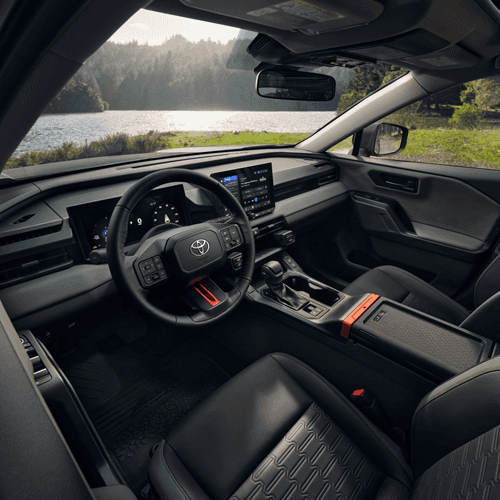
Photo Courtesy of Toyota
0 comment(s) so far on How Much Fuel Can Auburn Drivers Save With a Toyota RAV4 Hybrid?