

2026 Toyota Tacoma vs 2026 Ford Ranger: Which Truck Makes More Sense for Auburn, CA Drivers?
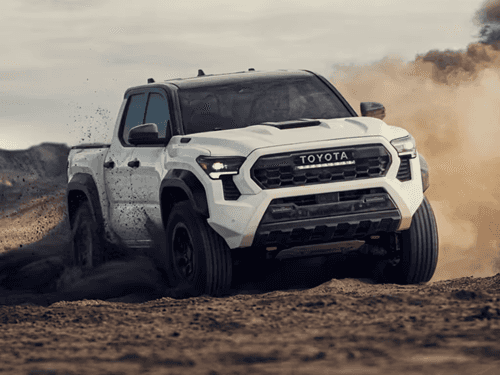 If you spend weekends on trails above Auburn, haul gear up to Tahoe, or just need something that handles Highway 49 as comfortably as it handles a dirt road, the midsize truck segment is worth a serious look. At Auburn Toyota, we work with drivers from Auburn, Roseville, and Sacramento every week who are weighing the Toyota Tacoma against the Ford Ranger, and the answer isn’t identical for every buyer.
Both trucks handle daily commuting well, but the Tacoma’s i-FORCE MAX hybrid delivers better torque and comparable fuel economy on mountain commutes along Highway 49. On towing, the Ranger edges ahead at 7,500 lbs maximum versus the Tacoma’s 6,500 lbs on gas trims, so if you’re regularly near the towing ceiling, that gap matters. For technical terrain near the Auburn State Recreation Area and Rubicon Trail, the Tacoma’s off-road trim selection, spanning TRD Off-Road, TRD Pro, and Trailhunter, gives it a clear advantage.
Browse our 2026 Tacoma inventory to see which trims are currently available at Auburn Toyota.
Performance and Powertrains: i-FORCE MAX Hybrid vs. EcoBoost 4-Cylinder
2026 Toyota Tacoma Engine Options
Toyota built the Tacoma around two powertrain options. The base i-FORCE 2.4-liter turbocharged four-cylinder produces 278 hp and 317 lb-ft of torque, handling everyday driving and trail work without issue. The i-FORCE MAX is the more interesting story: a 2.4-liter turbocharged hybrid system producing 326 hp and 465 lb-ft of torque. That torque figure, not just improved fuel economy, is what makes the i-FORCE MAX worth attention for Auburn drivers dealing with constant elevation changes and regular towing demands.
Electric motor assist during low-speed acceleration and grade climbing delivers power exactly where conventional engines struggle most. The i-FORCE MAX is available on TRD Sport, TRD Off-Road, and Limited, and comes standard on TRD Pro and Trailhunter.
2026 Ford Ranger Engine Options
Ford pairs the Ranger with its 2.3-liter EcoBoost four-cylinder, producing 270 hp and 310 lb-ft of torque. An optional 3.0-liter EcoBoost V6 pushes output to 315 hp and 400 lb-ft. Both are turbocharged and deliver a responsive, sporty driving character. The Ranger Raptor goes further with a high-output 3.0-liter EcoBoost V6 producing 405 hp and 430 lb-ft.
For drivers who prioritize lively throttle response over hybrid efficiency, the Ranger’s powertrain lineup makes a strong case. On torque delivery and mountain-road pulling power, though, the Tacoma’s i-FORCE MAX holds a meaningful advantage.
Towing and Payload: Hauling Gear Through the Foothills
For many Auburn residents, towing and payload specs determine whether a truck can actually do its job. Pulling a boat to Folsom Lake, hauling firewood from a rural property, dragging a utility trailer up a mountain grade, these are the situations that separate spec sheets from reality.
The 2026 Ranger edges out the Tacoma on maximum towing, rated at 7,500 lbs on XL, XLT, and Lariat trims. The Tacoma is rated at 6,500 lbs on gas trims and 6,000 lbs with the i-FORCE MAX hybrid. If you’re consistently near the top of midsize towing capacity, the Ranger’s specs are worth taking seriously. On payload, the Ranger is rated at up to 1,767 lbs and the Tacoma at up to 1,705 lbs, close enough that most real-world loads won’t reveal a difference.
Both trucks include towing-assist technology on higher trims, including trailer sway control and integrated brake controllers. That added confidence matters on the winding descents around Auburn. For most recreational and work use in this region, either truck handles the job, but the Ranger has a measurable edge if maximum towing is your priority.
| Spec | 2026 Toyota Tacoma | 2026 Ford Ranger |
| Horsepower (base / top) | 278 hp / 326 hp (i-FORCE MAX hybrid) | 270 hp / 315 hp (2.7L EcoBoost V6) |
| Torque (base / top) | 317 lb-ft / 465 lb-ft | 310 lb-ft / 400 lb-ft |
| Max Towing | 6,500 lbs (gas) / 6,000 lbs (hybrid) | 7,500 lbs (XL, XLT, Lariat) |
| Max Payload | 1,705 lbs | 1,767 lbs |
| Fuel Economy (city/hwy) | Up to 21/26 (2WD) / 19/24 (4WD) / 22/24 (hybrid) mpg | Up to 21/25 (2WD) / 19/24 (4WD) mpg |
Fuel Economy: Real-World MPG on Mountain Roads
EPA estimates tell part of the story. Around Auburn, sustained climbs, elevation shifts, and mixed traffic on routes like Highway 49 and Foresthill Road create conditions that expose inefficient powertrains quickly.
The Tacoma’s i-FORCE MAX hybrid returns an EPA-estimated 23 MPG combined on most trims, essentially matching the gas Ranger’s 21 city / 25 hwy (2WD) while delivering significantly more torque. On 4WD configurations, both trucks rate identically at 19 city / 24 hwy. The Tacoma hybrid achieves comparable combined MPG to the gas Ranger while producing a major torque advantage on mountain roads, a combination that matters for Auburn drivers doing regular elevation work. The Ranger’s EcoBoost is reasonably efficient for its class, but it operates on conventional fuel dynamics throughout.
Off-Road Capability: Taking on the Sierra Nevada
Few regions in California offer as much accessible off-road terrain as the Auburn-Colfax corridor. The American River canyon, forest roads through the Auburn State Recreation Area, Sierra Nevada access routes near the Rubicon Trail, local drivers have serious ground to cover.
Tacoma Off-Road Trims: TRD Sport Through Trailhunter
Toyota built a deep off-road trim ladder for the Tacoma. The TRD Off-Road adds a locking rear differential, Multi-Terrain Select, Crawl Control, skid plates, and 10.0 inches of ground clearance. The TRD Pro builds on that with FOX shocks, 33-inch tires, and the i-FORCE MAX standard. The Trailhunter takes a different direction, built around overlanding with an onboard air compressor, enhanced skid plate coverage, and a factory bed rack, making it a ready-to-run expedition platform without aftermarket buildout. For Auburn drivers who camp, explore, or overland regularly, this lineup depth is difficult to match.
Ranger Off-Road Options: Raptor and Trail-Ready Configurations
The Ranger Raptor is legitimately capable, with FOX Live Valve shocks, 33-inch tires, and a high-output 3.0-liter EcoBoost V6 producing 405 hp and 430 lb-ft of torque. It excels in higher-speed desert-style terrain. Worth noting: the Raptor is rated at only 5,510 lbs towing and has no hybrid powertrain option. Compared to the TRD Pro and Trailhunter, it suits a different buyer profile, one focused on performance-oriented trail driving rather than sustained backcountry access. Across more price points and use cases, the Tacoma’s off-road lineup runs considerably deeper.
Interior, Technology, and Daily Comfort
Both the 2026 Tacoma and Ranger have made real progress on interior quality compared to earlier generations. The Tacoma comes equipped with a large central touchscreen, wireless Apple CarPlay and Android Auto, and a cabin layout that balances utility with genuine comfort. Material quality and rear-seat space have improved noticeably across recent trims.
The Ranger similarly delivers modern connectivity, an intuitive interface, and a cabin that feels more car-like in its refinement. Ford has leaned into technology integration, and the result appeals strongly to buyers coming from crossovers. On daily-driver terms, the gap has narrowed to personal preference.
Pros and Cons by Use Case: Which Truck Fits Your Drive?
Spec sheets only get you so far. The real question is how each truck performs against the job you actually need it to do. Here’s how the Tacoma and Ranger stack up across the three use cases most common for Auburn-area drivers.
Daily Commuting (Highway 49, I-80, in-town driving)
Tacoma i-FORCE MAX hybrid:
- Pros: 23 MPG combined hybrid efficiency, instant low-end torque from the electric motor assist that smooths out stop-and-go and grade climbs, quiet cabin at highway speeds, strong projected resale value
- Cons: Hybrid trims carry a higher entry price than the base gas Tacoma, ride can feel firmer on TRD-tuned trims
Ford Ranger 2.3L EcoBoost:
- Pros: Up to 21 city / 25 hwy (2WD), sporty throttle response, more car-like cabin refinement that appeals to crossover buyers
- Cons: No hybrid option, conventional fuel dynamics throughout the lineup, typically steeper depreciation curve over five to seven years
Hauling and Towing (boats to Folsom Lake, trailers, work loads)
Toyota Tacoma:
- Pros: 465 lb-ft of torque on i-FORCE MAX for low-speed pulling and grade climbing, 1,705 lbs max payload, integrated trailer sway control and brake controller on higher trims
- Cons: 6,500 lbs max on gas trims and 6,000 lbs on hybrid, both below the Ranger’s ceiling
Ford Ranger:
- Pros: 7,500 lbs max towing on XL, XLT, and Lariat trims, 1,767 lbs max payload, available 2.7L EcoBoost V6 with 315 hp and 400 lb-ft for confident pulling
- Cons: Raptor drops to 5,510 lbs towing, no hybrid torque option for grade work
Trails and Off-Road (Auburn State Rec Area, Rubicon, forest roads)
Toyota Tacoma:
- Pros: Deepest off-road trim ladder in the segment with TRD Off-Road, TRD Pro, and Trailhunter, locking rear differential, Multi-Terrain Select, Crawl Control, FOX shocks and 33-inch tires on TRD Pro, factory overlanding setup on Trailhunter including onboard air compressor and bed rack
- Cons: Hybrid towing capacity drops to 6,000 lbs, which limits trailer-and-trail combinations
Ford Ranger:
- Pros: Raptor delivers serious high-speed desert capability with FOX Live Valve shocks, 33-inch tires, and 405 hp from the high-output 3.0L EcoBoost V6
- Cons: Off-road lineup is essentially one halo trim, Raptor towing limited to 5,510 lbs, no hybrid option across any off-road configuration
Ownership Value: Reliability, Resale, and Long-Term Costs
When comparing Tacoma and Ranger reliability, the conversation tends to start in the same place: the Tacoma’s track record is one of the strongest in the entire truck segment. That shows up in owner satisfaction data, service interval costs, and used vehicle values that hold well into high-mileage territory. It’s a pattern we see consistently with Tacomas traded in and sold through Auburn Toyota. For a detailed look at what drives that durability, see why the Tacoma holds up so well.
The Ranger has improved considerably over recent generations, and the current model is a better-engineered truck than its predecessors. Even so, long-term ownership comparisons still favor the Tacoma. Toyota’s dealer network, parts availability, and certified service infrastructure also contribute to lower overall cost of ownership for many drivers.
Resale value is a factor buyers sometimes overlook at purchase time. A Tacoma that holds its value strongly is effectively cheaper to own over five or seven years than a truck with sharper initial depreciation, and for financed purchases, projected residual value can significantly shift the total cost calculation.
Find Your 2026 Toyota Tacoma at Auburn Toyota
We carry the full 2026 Tacoma lineup at Auburn Toyota, including TRD Off-Road, TRD Pro, and Trailhunter configurations built for the terrain Auburn drivers actually use.
Browse our 2026 Tacoma inventory. Give us a call at 530-885-8484, or contact us to schedule a test drive. Whether you’re prioritizing your daily commute, a towing job, or weekend trails, we’ll help you find the right trim.
Photo Courtesy of Toyota
0 comment(s) so far on 2026 Toyota Tacoma vs 2026 Ford Ranger: Which Truck Makes More Sense for Auburn, CA Drivers?